
THE OFFICIAL
ONLY FROM REDWOOD MEDIA
Hover over a menu item to access other pages

A RATING

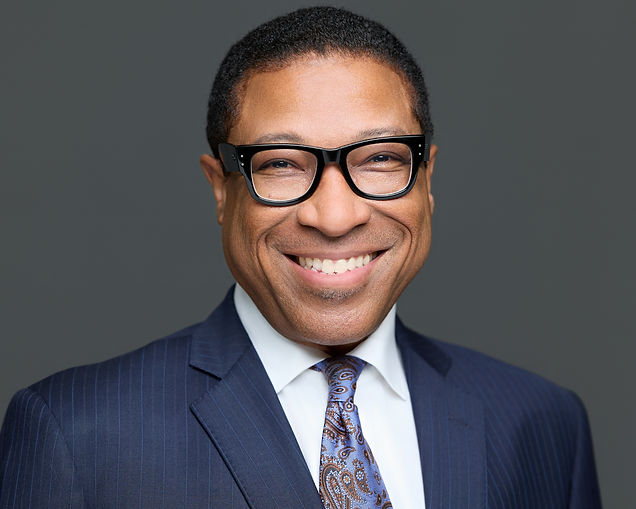

Jim Dunn, PhD
When it comes to people, Jim Dunn, PhD, has spent a lifetime proving that they are not just a company’s greatest asset—they are its greatest advantage. For more than three decades, he has been at the forefront of strategic human resources, leadership, and organizational development, reshaping workplace cultures and transforming how executives think about their people. Known both as a national leader and a visionary, Jim has built his career around one guiding principle: when people thrive, organizations do too.
Today, Jim serves as president and CEO of LD Human Capital Consulting, a firm he launched in 2023 to bring humanity back into human resources. With offices in Atlanta, Charlotte, Chicago, Dallas, and London, the company partners with leaders across the C-suite—40% CEOs, 40% senior executives, and about 20% first-time leaders stepping into top roles. Its services are broad but focused: executive and business coaching, HR M&A integration, cultural assessment and mapping, workforce development planning, executive recruitment, and total rewards strategy. Each engagement is designed to strengthen leadership capability and create cultures where people—and performance—can flourish.
Jim’s work spans executive and business coaching, HR M&A integration, and workforce and leader development, expertise that has supported his greatest professional accomplishments—including serving as a sitting chief HR officer six times across multiple industries. Yet he is just as proud of running a successful practice while serving as the primary caregiver for his mother, Lillian, who suffers from dementia. In fact, LD Human Capital Consulting carries her initials—a lasting tribute to the woman whose strength continues to inspire his work. In 2024, Jim added another milestone to his career with the publication of his book, 101 Lessons in Leading with Laughter: Research and Real Stories on Humor at Work, after years of contributing to Newsweek, Forbes, and other outlets. His earlier career was just as impactful, serving as global head of HR for former President Jimmy Carter and achieving several degrees, including: a BS in chemistry from Howard University, an MBA from MIT, a Master of Public Health and a PhD from Emory University, a PhD from Benedictine University, and a Doctor of Health Administration from the Medical University of South Carolina. He has also earned certifications in nearly every aspect of the human capital field, from compensation and benefits to global remuneration and mediation.
Over the years, Jim has been recognized with honors from Forbes, Savoy, CIO Look, and Becker’s Hospital Review. But while the accolades matter, what matters more to him is impact—the ability to shape leaders, guide organizations, and keep humanity at the center of work.
What makes your executive and business coaching approach so unique?
Clients have often told me that what makes my approach different is not only my background as an advisor, but that I’ve truly lived the C-suite experience. Working directly with CEOs and advising boards taught me that leadership isn’t theoretical—it’s a lived, daily reality with enormous responsibility. When you sit in that seat, you wear several hats at once. You’re a member of the executive team, an advisor to the CEO on its effectiveness, and often the one who speaks to the board on behalf of your boss. In fact, during CEO performance reviews, it’s usually just you and the board in the room—your boss isn’t even there. At the same time, you carry the responsibility for driving culture across the entire organization. The weight of those dynamics can’t be fully understood from the outside. That firsthand perspective allows me to connect with leaders in a way that’s both strategic and practical. I know what it feels like to be under pressure, to balance competing expectations, and to align culture with business goals. My coaching is grounded in that lived experience, and that’s what clients say makes it so valuable.
As an “insider” executive coach, how often do your clients’ issues stem from getting in their own way, or getting stuck in their heads?
I’d estimate about 70% of the time leaders are in their own heads, getting in their own way. I often remind them that while no one is asking them to be someone they’re not, it is their responsibility to ensure who they are doesn’t interfere with being effective. Ideally, values and roles align, but even when they don’t, leaders must still guide teams that are different from them. When engagement scores are low, turnover is high, and their company is paying me to be there, the evidence is pretty clear that something needs to change.
What value do you bring to clients?
One of the greatest values I provide is protecting organizations from the high cost of leadership failure. When companies recruit executives, they often pay a third-party search firm 30–35% of the candidate’s base salary. For seven-figure roles, that’s a massive investment—and when the leader doesn’t succeed, the financial and cultural costs are even greater. By comparison, the cost of six to nine months of executive coaching is minimal, yet it can make the difference between a leader thriving or flaming out.
Your new book, 101 Lessons in Leading with Laughter, is being celebrated by executives and C-suite leaders as a “brilliant, hilarious must-read” on the transformative power of humor in the workplace. What are some of the questions you explore, and how big a role does laughter play in contributing to greater collaboration, stronger teams, employee retention/loyalty, and ultimately success for leaders and companies?
I’m a lover of laughter, though my life and career have included moments that were anything but lighthearted. For me, humor has always been a way to elevate the good times and soften the difficult ones. I also understand that not everyone values humor in the same way, but when used appropriately, it disarms tension, promotes inclusivity, and even helps resolve conflict. In the workplace, those outcomes are powerful—they foster trust, collaboration, and stronger teams. They also contribute to employee loyalty and retention, which are critical to long-term success for leaders and organizations alike.
Jim Dunn, PhD
President and CEO
LD Human Capital Consulting
Website: www.ldhcc.com
LinkedIn: www.linkedin.com/in/jimdunnphd